
Loading...
Serving Azusa, CA and surrounding areas. (626) 540-1971
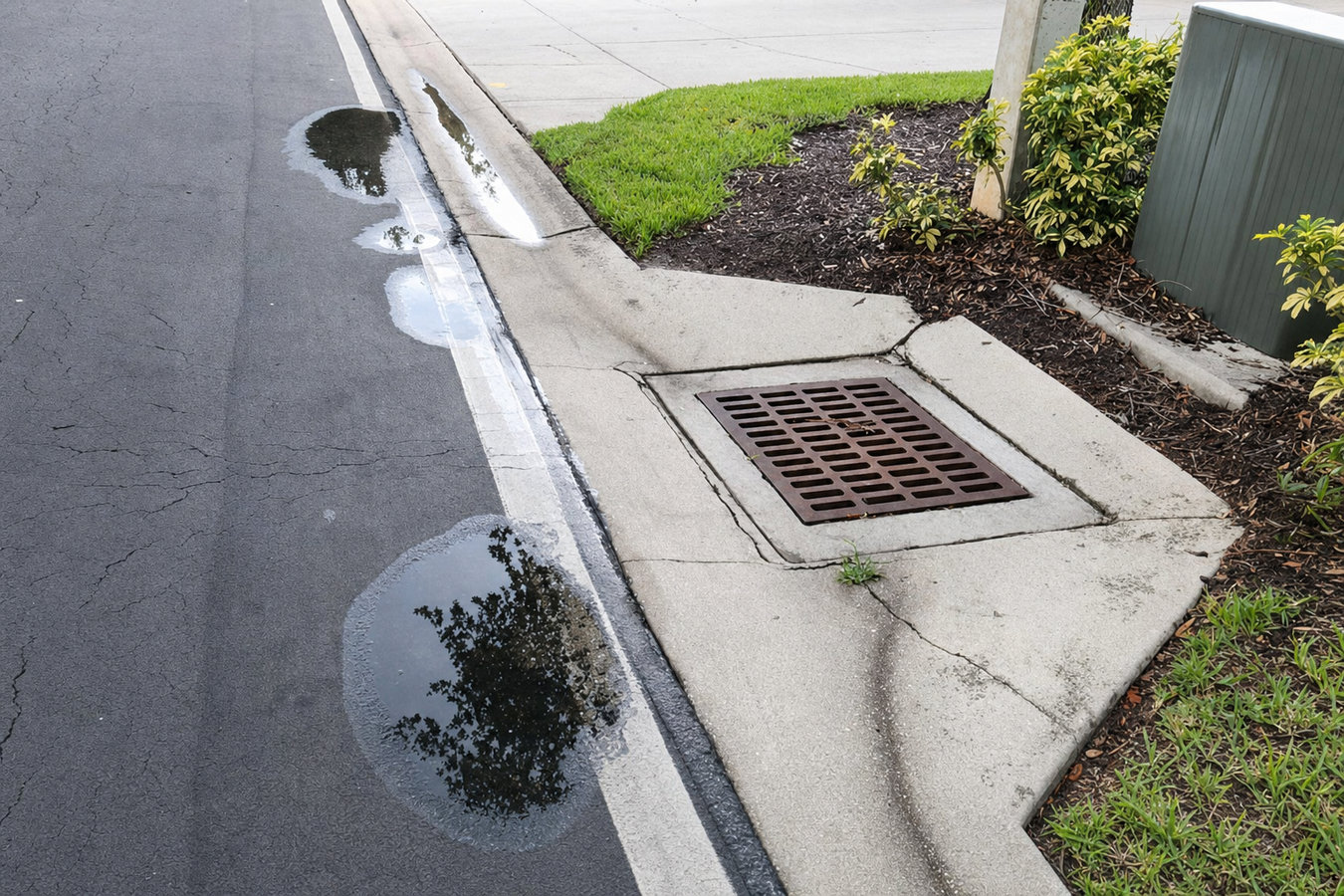
Standing water on your driveway is destroying the base layer beneath it. We assess where water pools, install the right drains or channels, and correct the slope so your pavement stays dry and intact through every rainy season.
Drainage solutions in Azusa involve assessing where water pools, flows, or sits after rain, then installing the right combination of channel drains, catch basins, or corrected slopes to redirect it safely - most residential jobs are completed in one to three days.
If you have puddles that sit for hours after a storm, or water creeping toward your garage door, the problem is not going to fix itself. In Azusa, where clay-heavy soils shift with every wet season, water that stays near your pavement is actively eating away at the base beneath it. Every rainy season without a fix means more cracking, more sinking, and a larger repair bill. Addressing drainage now protects the asphalt you already have and prevents the kind of base failure that requires full replacement.
In many cases, proper drainage goes hand-in-hand with grading and excavation - correcting the slope of the surface so water has a clear path away from your home and pavement, not toward it.
If puddles sit in the same spots for hours after a storm, your surface is not shedding water the way it should. In Azusa, where heavy rain events can dump water quickly, those puddles put real stress on the pavement beneath and can seep into the sub-base with every storm.
Asphalt in the San Gabriel Valley is already under pressure from clay soils that shift with moisture changes. If you are seeing new cracks forming or old ones widening, water getting into and under the surface is often the accelerant. Fixing the drainage is usually the first step before any crack repair will hold long-term.
If rain or irrigation water flows across your driveway toward your garage door, foundation, or home entry, that is a drainage problem that goes beyond the pavement itself. Water near a foundation is a serious concern, and redirecting it is both a pavement issue and a home-protection issue.
Uneven or sunken areas in asphalt are often a sign the base beneath has been softened or eroded by water. In Azusa's clay-heavy soils, this can happen gradually as the ground swells and contracts season after season. A low spot that collects water will keep getting worse until the drainage is corrected.
Every drainage job starts with a careful on-site assessment - we walk the paved area, measure existing slopes, and track where water enters and exits the property. From there, we design a system around your specific yard, not a one-size-fits-all fix. For most residential properties, that means one or more of the following: regrading the surface so it slopes away from the house, adding a channel drain or trench drain across the driveway apron, or installing a catch basin that collects water and routes it to a safe outlet. When the sub-base beneath the pavement has been damaged by repeated saturation, we pair the drainage work with grading and excavation to address what is happening below the surface before any new paving goes down.
Drainage problems left unresolved also tend to accelerate surface damage, which is why we often recommend pairing a drainage fix with speed bump installation or other surface upgrades when the work is already underway - combining projects saves a mobilization cost. If existing cracks or failed sections need attention alongside the drainage correction, we handle both in a single visit so you are not calling two contractors or paying for two setups.
Best for driveways and paved areas where the slope has settled unevenly and water now flows toward the house instead of away from it.
Best for driveway aprons and entry points where water concentrates and needs a fast route to a safe outlet.
Best for low spots or larger paved areas that collect runoff from multiple directions and need a central collection point.
Best for properties where surface drainage alone is not enough and water needs to be carried underground to a street, curb, or designated discharge point.
Azusa sits on an alluvial fan at the base of the San Gabriel Mountains, where the ground is made up of layered sediment deposited over centuries of mountain runoff. That terrain creates a natural downward slope toward the valley floor, which can concentrate water in unexpected places on your property during a storm. The soils here also tend toward clay, which swells when wet and contracts when dry - a cycle that stresses the base beneath any paved surface and makes standing water especially damaging. When heavy rain comes in from the mountains, it arrives fast and in volume, and a drainage system designed for light drizzle will not keep up. Getting a system built for surge conditions is what makes the difference in a real Southern California storm.
We work on drainage projects throughout Azusa and nearby communities. Homeowners in Irwindale and Duarte face the same clay soils and alluvial-fan drainage challenges, and we bring that regional knowledge to every assessment. For more on stormwater management standards in California, the California State Water Resources Control Board sets the rules for where drainage water can be discharged - a detail a good contractor will account for in the design so you stay compliant.
Describe what you are seeing - where water pools, whether it is getting near the house, and how long it has been happening. We respond within one business day and schedule a site visit. No phone quote without seeing the site.
We walk your paved area, measure the slope, identify where water enters and needs to exit, and check the condition of the asphalt and sub-base. You receive a written estimate explaining what is proposed and why - no vague line items.
If your project connects drainage to the street or a public storm drain, we handle the permit application with the city or local agency. This step can add a week or more depending on approval speed - we tell you upfront whether it applies.
The crew prepares the surface, installs drain components, repaves any removed sections, and confirms the new slope and drainage path work as designed. Before leaving, we walk you through the outlet locations and how to keep drains clear.
Free on-site assessment, written estimate, no pressure. We reply within one business day.
(626) 540-1971We do not price drainage jobs over the phone. Every estimate starts with a walkthrough of your property - measuring slope, tracing water flow, and checking the sub-base. A quote without a site visit is a guess, and a drainage solution built on guesswork fails within a season.
Azusa's position at the base of the mountains means water behavior here is different from flat-valley properties. We account for how fast water moves off the foothills, how clay soils respond to saturation, and how to size a system for surge conditions - not just average rain.
California requires paving and drainage contractors to hold an active state license above a certain project size. You can verify any contractor's license yourself at the{' '} California Contractors State License Board before signing anything - and we encourage you to do so.
You receive a written description of exactly what will be installed and what happens if the drainage problem returns within the warranty period. That is real protection - not just a handshake.
A well-designed drainage system built on a proper site assessment lasts through multiple rainy seasons without the problem returning. That combination - thorough assessment, locally informed design, and written accountability - is why homeowners in Azusa call us when they are serious about solving a drainage problem, not just patching it. You can also verify licensed contractors in California through the California Contractors State License Board before any work begins.
Add a speed bump to a driveway or private lane - asphalt-built, heat-resistant, and done in a single day.
Learn MoreCorrect the slope and sub-base of a paved area before drainage components are installed or new pavement is laid.
Learn MoreAzusa's rainy season does not wait - call now to get your driveway draining properly and protect your pavement before the next downpour hits.